
Metadata + Music :: What is it and Why is it so important?
We’re increasingly living in a world built around metadata, which is the descriptive information about the primary data like a song file. Metadata is often overlooked by songwriters, artists and bands because it takes time and some additional research that many just don’t want to put it. Metadata is becoming more and more important though, as we move into the age of streaming music.
What is metadata?
Proper definition: a set of data that describes and gives information about other data.
In other words, metadata is information that will help to describe your music as well as provide contact information for those looking to contact you to use your music. We are in the digital age, so CD’s are a nice package but it is the digital file that ends up getting stored and saved. So tagging your music files with the appropriate metadata is key. And it does more than that. Having the files properly tagged will also tell them a bit more about the music and help them narrow down their music choices.
Why is it important?
 The metadata of a song contains all the info about who should get paid, including songwriters, publishing company, record label, and performing rights organization.
That alone should be enough reason to fill in the blanks. But another big reason is that because song placement on film and television is so important to an artist’s income these days, metadata has become vital to the very people who decide what makes the cut – music supervisors.
Filling Out Your Song Catalog
If you haven’t already, you should start creating a song catalog using a spreadsheet program or other programs. There are several bits of information that you should have for your metadata.
The Guild of Music Supervisors recommends that as much information as possible be included in the metadata of all digital music submissions, with underlined content being required.
In order to cover all your metadata needs, here’s what to include with every song, especially if you’re trying for a sync placement:
- Song Name
- Artist
- Contact Information (email/phone)
- Genre
- Subgenre
- Composer (s) – with PRO info and splits
- Song Summary
- Mood
- Key words
- Instruments
- BPM/tempo
- Key
- Lyrics
- Year of Copyright/year created
It seems like a lot of info, but if you want a placement, it’s all vital in rising above the competition.

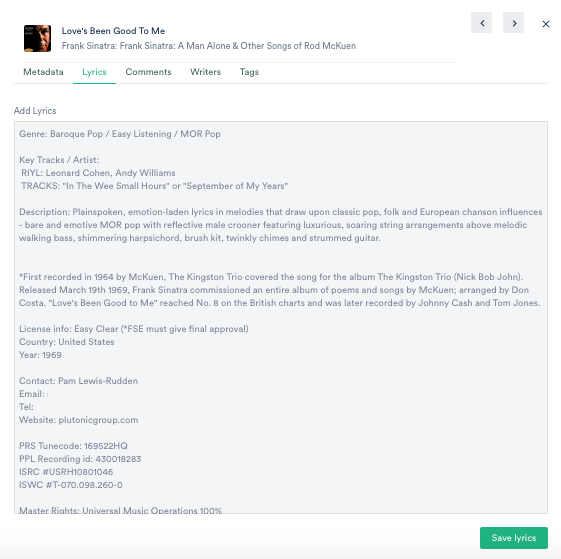
10 Audio Metadata Editors
Here are a number of suggestions for some metadata editors, since many DAWs don’t provide extensive access to many of the metatags that are needed. Here’s a list of 10.
iTunes – There’s a nice editor right within the app.
Metadatics – This is Mac only and costs $9, but it also covers a wide range of file formats.
Tag – A fairly simple Mac only editor that’s free.
Tuneup – This is a Windows and Mac editor that has both a free and premium version.
ID3 Editor – A simple Mac editor that provides most of the metatag needed. Free.
Musictag Editor for Mac – free to try up to 10 times, then $5.99.
Musicbrains Picard – This is a pretty geeky editor that cross platform, but it’s very extensive if you get down inside it. And it’s free.
UDTE-ID3 – Another PC only editor that supports a wide range of file formats.
MediaMonkey – An iOS tag editor that supports multiple file formats.
WaveAgent – A very cool Wave file editor for both PC and Mac.
If none of these 10 seems to fit your needs, there are plenty of other audio editors available. Just do a Google search and find the one that suits you best.
Read more: Synchtank blog on Guild of Music Supervisors Metadata Standards