
The Art of Cold Emailing
An Insider’s Guide: How to Write Emails People Actually Read (and Reply To)
With 35+ years in the music industry, including 12 years laser-focused on sync licensing and music placements, I’ve seen it all. But let me tell you, folks, one thing never ceases to amaze me: there’s nothing quite like the horror of a poorly crafted cold email.
Pitching emails to strangers is a special kind of hell. But for those who don’t have a publicist, a label, or a team advocating for their work, it’s sometimes a necessary evil.
But here’s the brutal truth about these cold emails I receive:
A lot of them are bad. Like, really bad.
Most of them shouldn’t have been sent to me at all. Why? Because senders didn’t do their research. Spoiler alert: I’m not a music publisher, I do not represent individual composers or bespoke compositions nor do I run a music production library.
A good email—cold or otherwise—is engaging, short, and grabs attention. A bad one is awkward, invasive, and can make recipients dislike you (and your company). Some might even think it doesn’t warrant a reply.
If you want to get a response to your emails, you’ll need to employ the magic of etiquette, one of the best ways to create a human connection with the reader.
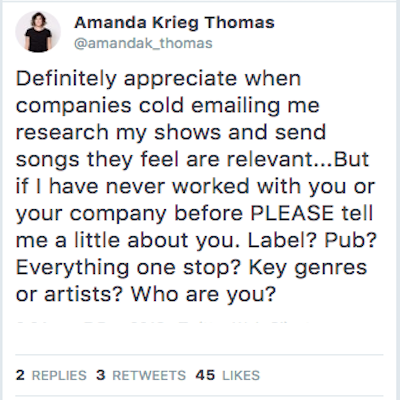
SYNC TIP #1
SYNC TIP #2
And for the love of all things catchy, please address us by name! “Hey” or “Dear Sir/Madam” just won’t cut it – but don’t act like you know me if you don’t. Show you’ve done research on me and or Plutonic Group which, if you know me, is basically one and the same…
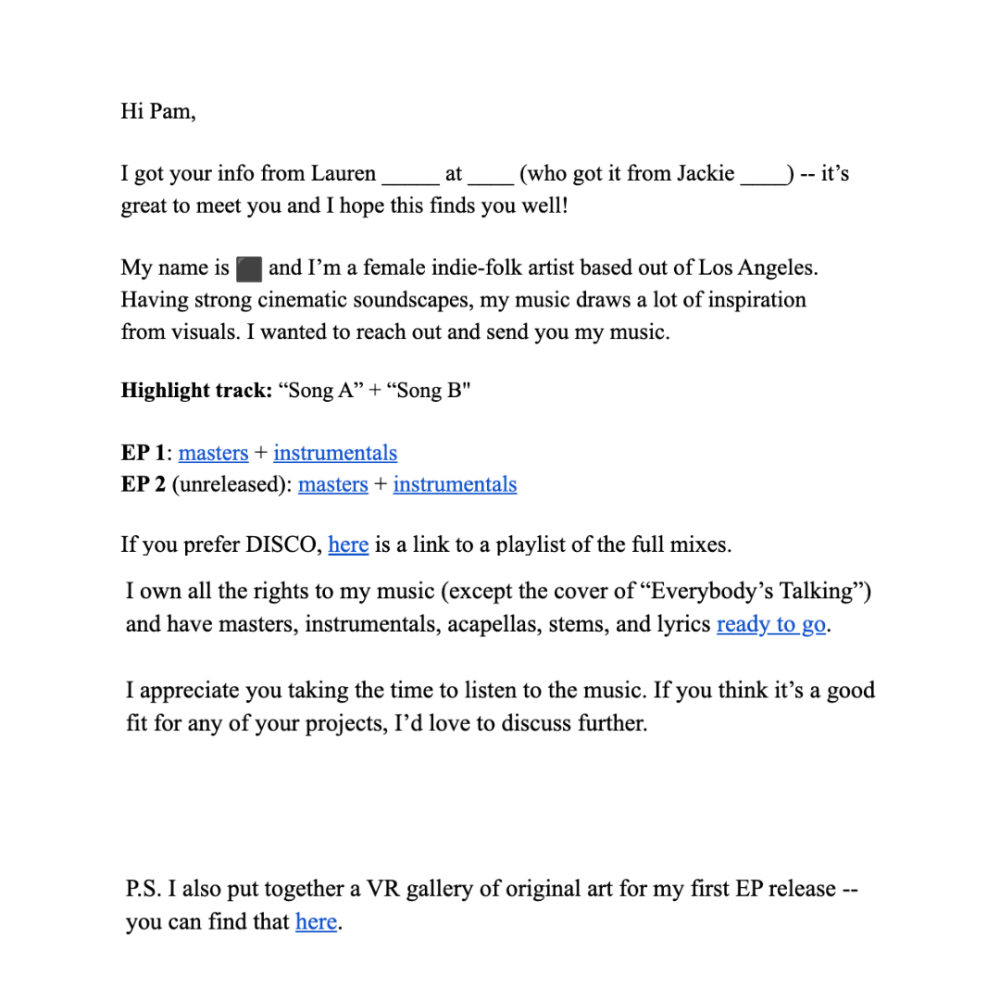
Here’s a prime example below:
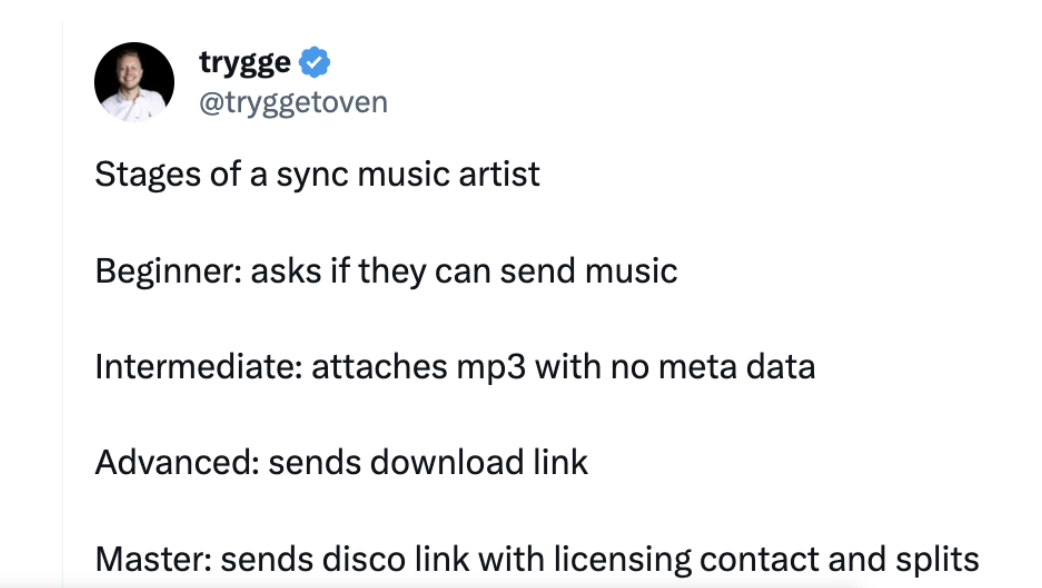
SYNC TIP #3
Including DISCO links of your mp3s is ideal. These links allow supervisors and sync agents to stream, add to their playlists, or download the song. DISCO has become an industry standard in the sync community, so your chances of being heard increase when you make it easy for us as well as festival promoters, radio pluggers and anyone else in the music ecosystem.
Just so you know, I despise Dropbox but will accept it if you haven’t signed up for DISCO as yet..And don’t even bother sending anything via Google Drive EVER! But to be fair, it’s always best to ask what format the recipient prefers as everyone has their own personal preference.
SYNC TIP #4
Sync Tip Summary
- Do your homework: Know who you’re emailing and why.
- Best of Your Best: Showcase tracks that fit our needs. Use DISCO, embedded with complete metadata.
- Keep it Short: No one likes reading essays in their inbox.
- Be Polite, Concise, and Professional: First impressions matter, so let’s keep things respectful and clear.
- Personalize: Make the recipient feel like they’re the only one who matters.
Follow these simple tips and you’ll be opening doors for your music in no time! So, get writing and make it count! 🎶
FYI